
Market Analysis
Indian Basmati Rice Exports in 2026: Global Demand, Key Markets & What Buyers Should Know
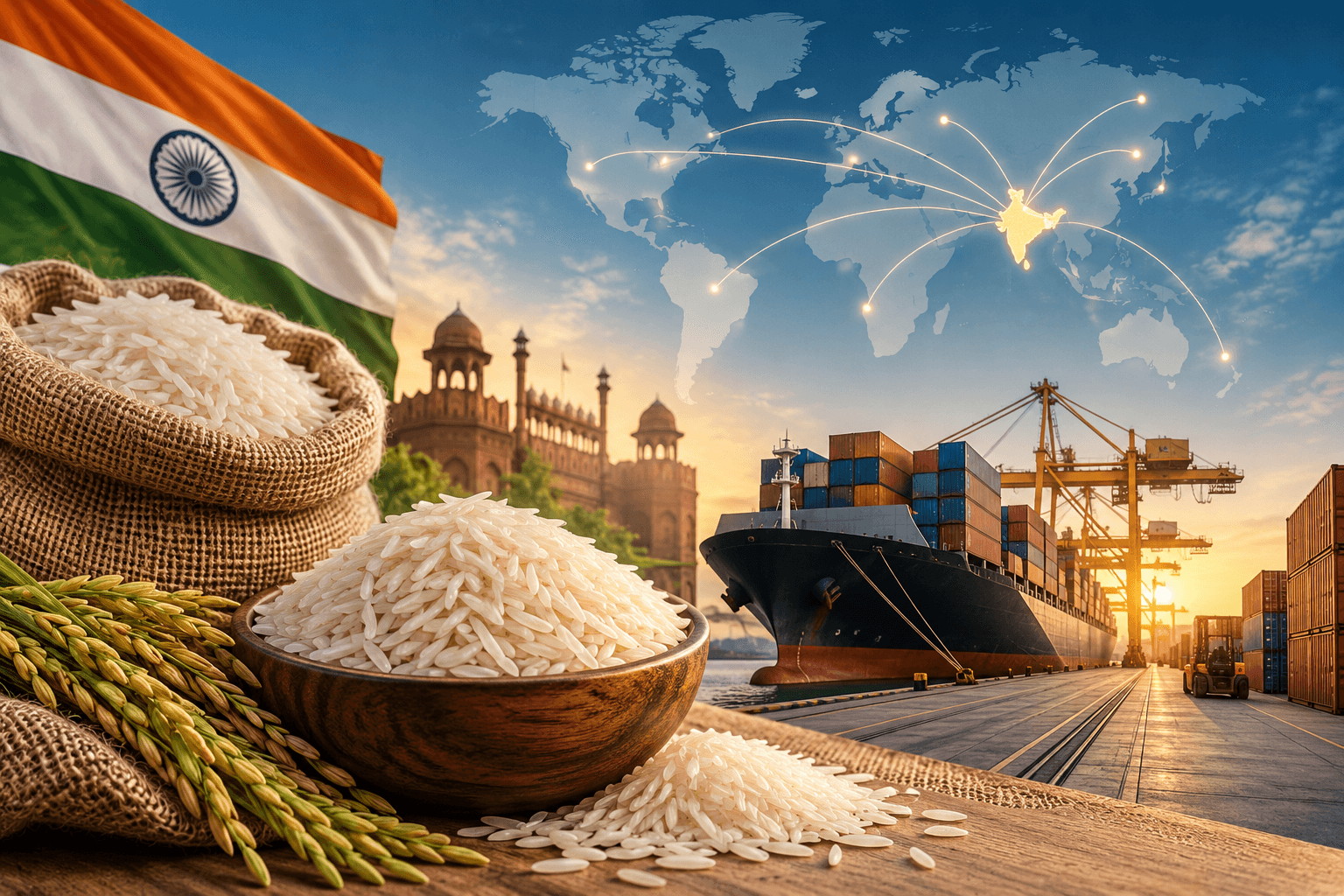
India's Basmati rice industry remains one of the country's most important agricultural export sectors, connecting producers and millers across northern India with food importers, distributors and retailers around the world.
In 2025–26, India exported 6.52 million metric tonnes of Basmati rice, valued at approximately US$5.67 billion, according to APEDA data.
For international buyers, however, India's Basmati trade is about more than export volumes. Variety, grain specifications, processing, quality consistency, origin, pricing and logistics all play an important role when sourcing for different markets.
India's Position in the Global Basmati Trade
India has established itself as the world's leading supplier of Basmati rice, supported by its large production base, established milling industry and extensive export infrastructure.
Basmati is particularly associated with the northern Indian growing regions, where traditional varieties and modern processing capabilities support exports to demanding international markets.
The scale of India's export industry gives international buyers access to a broad range of specifications, including different varieties, grain lengths, processing methods and packaging formats.
For buyers, this creates flexibility — but it also makes supplier selection and specification control important.
Key Markets for Indian Basmati Rice
India's Basmati exports are concentrated across several major international markets.
According to APEDA's 2025–26 data, the leading destinations included:
Saudi Arabia Iran Iraq United Arab Emirates Yemen United States
Saudi Arabia accounted for approximately 16.6% of India's Basmati exports, followed by Iran at 13.9% and Iraq at 11.2%.
The UAE represented approximately 8.2%, while Yemen and the United States accounted for approximately 5.7% and 5.0%, respectively.
These markets differ significantly in consumer preferences, regulatory requirements, preferred varieties and purchasing structures.
For exporters and international buyers, understanding the destination market is therefore as important as understanding the rice itself.
Why Basmati Specifications Matter
"Basmati rice" is not a single uniform commodity.
International buyers can source different varieties and specifications depending on their target market and customer requirements.
Important commercial specifications can include:
Variety Grain length Degree of milling Moisture Broken percentage Foreign matter Sortex quality Crop year Aging Packaging Laboratory and inspection requirements
For example, buyers purchasing rice for premium retail markets may prioritize appearance, grain length, aroma and consistency, while institutional or food-service buyers may have different requirements based on their end use.
Clear specifications should therefore be agreed before pricing and shipment.
The Importance of Rice Processing and Aging
Processing can have a significant effect on the characteristics of Basmati rice.
Depending on the product, buyers may source raw, steamed, sella or other processed forms.
Aging is another consideration frequently discussed in Basmati trade. Properly aged rice can exhibit different cooking and moisture characteristics compared with freshly harvested rice.
However, aging should not be treated as a simple measure of quality by itself.
The commercial value of aged rice depends on the variety, storage conditions, processing quality and the specifications required by the buyer.
For international procurement, the most important consideration is consistency with the agreed specification.
India's Export Infrastructure
India's established rice export ecosystem provides international buyers with access to experienced exporters, processors, logistics providers and port infrastructure.
APEDA data shows that India's overall rice exports have grown substantially over recent years.
Between 2020–21 and 2024–25, India's total rice export value increased from approximately US$8.82 billion to US$12.47 billion, while export quantities increased from approximately 17.73 million MT to 20.19 million MT.
This growth reflects India's increasingly important role in global rice trade.
At the same time, international buyers should consider the complete supply chain rather than focusing only on the FOB price.
Availability, quality control, documentation, container positioning, port handling, freight and destination-market requirements can all influence the final landed cost.
What International Buyers Should Consider
For buyers evaluating Indian Basmati suppliers, several factors deserve attention before placing an order.
1. Define the Exact Specification
A clear product specification reduces misunderstandings between buyer and supplier.
The specification should cover the variety, processing method, grain characteristics, tolerances, packaging and other quality parameters relevant to the destination market.
2. Verify Quality and Consistency
A supplier's ability to maintain consistent quality across multiple shipments is often more important than a single competitive quotation.
Samples, laboratory analysis, pre-shipment inspection and agreed quality tolerances can help reduce commercial risk.
3. Consider the Crop and Processing Cycle
Rice availability and pricing can change depending on crop conditions, milling capacity, inventory and market demand.
Buyers planning regular procurement should consider these factors when determining purchasing schedules.
4. Review Destination-Market Requirements
Different countries can have specific requirements relating to food safety, certification, inspection and documentation.
Buyers should confirm applicable requirements for their destination before shipment.
5. Evaluate the Complete Trade Cost
The lowest FOB quotation does not necessarily represent the lowest landed cost.
Packaging, freight, insurance, inspection, documentation, duties and destination charges can all influence the final economics of an import transaction.
Looking Ahead
India's position in the global Basmati market is supported by strong export infrastructure, established international demand and a large network of producers and processors.
With 6.52 million MT of Basmati rice exported in 2025–26, the scale of the sector provides international buyers with significant sourcing opportunities.
But successful procurement depends on more than finding a supplier with an attractive price.
For international buyers, the stronger approach is to define the required specification clearly, evaluate supplier capabilities, verify quality and understand the complete logistics and regulatory requirements before committing to a shipment.
Final Takeaway
India continues to play a central role in the global Basmati rice trade.
For buyers sourcing from India, the opportunity lies in the country's depth of supply, processing capabilities and established export network.
The key is disciplined procurement: clear specifications, reliable quality, transparent commercial terms and dependable execution.
At Agrosyne Global Commodity, we work with international buyers to facilitate commodity sourcing from India and connect demand with suitable supply across global markets.
Sources: APEDA — Agricultural and Processed Food Products Export Development Authority.